
ABOUT US
Home » About Us
Sanatan Sangeet Sanskriti
Honouring the enduring legacy of Sanatan Sangeet Sanskriti, the IILM Centre for Arts & Ideas now proudly houses a dynamic ecosystem designed to celebrate creativity in all its forms.
Together, its spaces create a seamless environment for performance, practice, dialogue, learning and quiet reflection.
A cultural haven where every space embodies a unique purpose – Sakshaat as an auditorium for performances, Sameep as an intimate performance space, Sahakaar for creative workshops, Sangati for meaningful conversations, and Sadhana as a sanctuary of knowledge – Sameksha seamlessly aligns with this vision. It offers artists and audiences alike a dedicated space to explore aesthetics, narratives, and the evolving language of contemporary and traditional art.
Its founding belief was simple yet profound:
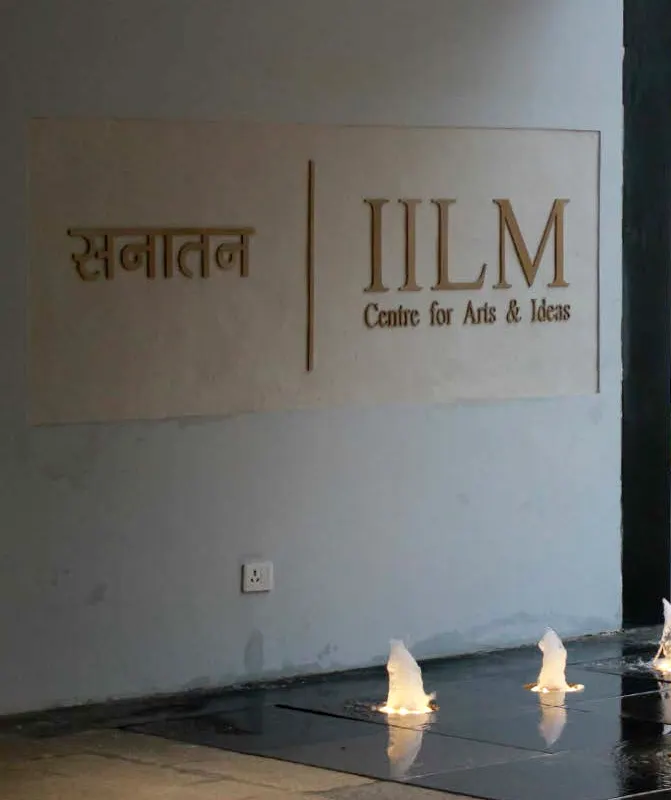
- That art is eternal.
- That music, dance, and visual expression are unifying forces that transcend religion, language, culture and geography.
- And that through the arts, we discover not only each other, but ourselves.
Rooted in the idea of Nadha Brahman the primordial cosmic sound symbolised by Om, the institution was created as a promoting forum, research centre and creative hub to nurture India’s performing and visual arts.
Over the decades, Sanatan Sangeet Sanskriti has evolved into a place of inspiration and exchange honouring tradition while embracing the contemporary.
The Journey of Sanatan, IILM Centre for Arts and Ideas
In 1990, Sanatan, Sangeet and Sanskriti was founded by Dr Kulwant Rai, Shri NKP Salve, Shri Atal Behari Vajpayee, Justice V.B Eradi, Pandit Birju Maharaj, and Shri MN Krishnamani. with a vision to establish a space that fosters integration of music, performing arts and visual arts under one roof in the heart of New Delhi.
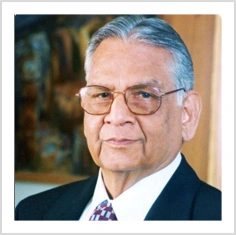
Dr Kulwant Rai
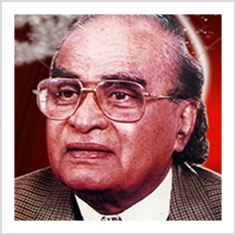
Shri NKP Salve
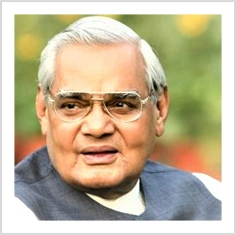
Shri Atal Behari Vajpayee
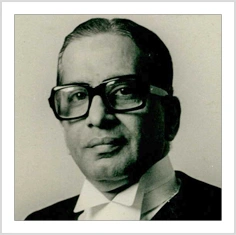
Justice V B Eradi
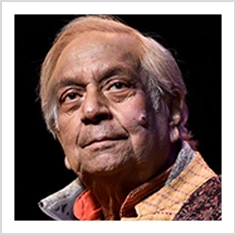
Pandit Birju Maharaj
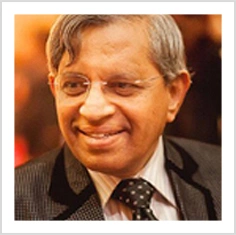
Shri MN Krishnamani
Original Charter: The original charter of the Sanskriti, as agreed by the founders, is given below:
“Sanatan” in Sanskrit means “eternal” or “time-less”. The coming into existence of Sanatan Sangeet Sanskriti is the result of the efforts of a group of lovers of music and dance to find a Promoting – Forum – Cum – Research – Institute for music, dance and allied arts.
In India it is believed that the divine principle which was all pervading, before becoming and evolving into the material words viz., the Earth, the Planets, the Sun & the Stars which are numberless, was in the form of sound – “Nadha Brahman” – which is symbolised by the mystic word “OM”.
Music, dance and art have a unifying effect. They transcend religion, language and other seemingly dividing factors. These three are also one. While dance is music in action, art is a kind of frozen music. It is necessary to promote and encourage music, dance and art for the sake of harmony, unity and world peace. Music, dance and art will enable man to understand himself better and to realize his true nature.
Milestones
The founders constituted two National Awards to be presented annually.
The first award, ‘Sanatan Nritya Samman’ is to honour a Senior Artist for his/her Personal Excellence and outstanding contributions to Indian Classical Music/Dance.
The second award, ‘Sanatan Sangeet Puraskar’ will be given to a young upcoming artist in recognition of his/her talent and potential for excellence.
Over time, the awardees have included:
- Pandit Bhimsen Joshi, who received the first Samman in 1993, from the Hon’ble Prime Minister of India, Shri P.V Narasimha Rao.
- Shri Lalgudi G Jayaraman in 1994 by Hon’ble Vice President of India, Shri K R Narayanan.
- Smt Sonal Mansingh in 1995 by the Prime Minister of Mauritius, Shri Anerood Jugnauth Smt Kishori Amonkar in 1996 by Hon’ble Prime Minister, Shri H D Deve Gowda.
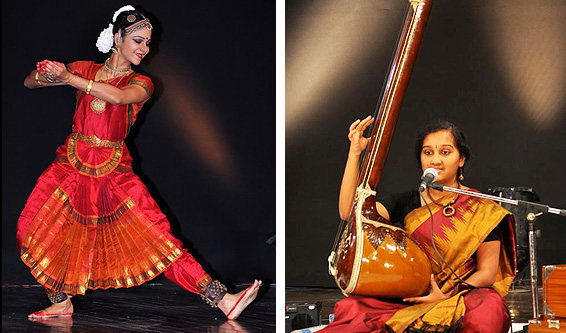
Other awardees included, Kumari Vijaya Lakshmi, Kavita Dwibedi, A R Rehman and Mandolin Srinivas were the recipients of the Sanatan Puraskar, Shri Hari Prasad Chaurasia, Ustad Amjad Ali Khan, Pandit Birju Maharaj, Dr L Subramanium and Pandit Shiv Kumar Sharma. Recipients of the Puraskar include Smt Arushi Mudgal, Smt Monisa Nayak, Kumari Mythili Prakash and Shri Pushkar Lele.
Sanatan Sangeet Sanskriti has been hosting a literary festival since 2017
Words in the Garden – a celebration of literature, arts and ideas, in collaboration with India International Centre, was launched in 2017. This annual festival, specially curated, is held to celebrate the incredible creativity, imagination and ideas that the city of Delhi generates, sustains and embodies.
Each year, the festival focussed on different themes – “Meer Ki Dilli”, “Ghalib ki Dilli”, “Bapu Ki Dilli”, “Dilli ki Sanskriti” and “Dilli ki Mahilayen” – and explored them through discussions, dialogues, readings, recitals, exhibitions, workshops and more. There were specially curated themed meals, theatre, cinema and performances. Words in the Garden has attracted more than 250 artists, authors, and eminent speakers in these years.
After a hiatus of a few years, we have recommenced the awards to young artists and achievers since 2023.
Sanatan Sangeet Puraskar Awardees, 2023:
- Sanatan Sangeet Puraskar in the category of Music – Smt Sawani Mudgal
- Sanatan Sangeet Puraskar in the category of Dance – Smt Shivani Salhotra
- Sanatan Sangeet Puraskar in the category of Art – Smt Baaraan Ijlal
- Sanatan Sangeet Puraskar in the category of Literature – Smt Poonam Arora
- Sanatan Sangeet Puraskar in the category of Ideas – Shri Tarun Nangia
Sanatan Sangeet Puraskar Awardees, 2024:
- Sanatan Sangeet Puruskar in the category of Literature – Sudeep Sen
- Sanatan Sangeet Puruskar in the category of Art – Vibha Galhotra
- Sanatan Sangeet Puruskar in the category of Dance – Navina Jafa
- Sanatan Sangeet Puraskar in the category of Music – Sudha Raghuraman
- Sanatan Sangeet Puraskar in the category of Ideas – Aarti Gupta
Sanatan Sangeet Puraskar Awardees, 2025:
- Sanatan Sangeet Puruskar in the category of Ideas – Shweta Rajpal Kohli
- Sanatan Sangeet Puruskar in the category of Literature – Jyotsna Mohan
- Sanatan Sangeet Puruskar in the category of Art – Allen Shaw
- Sankaran Sangeet Puruskar award in the category of Dance – Ragini Maharaj
- Sankaran Sangeet Puruskar in the category of Music – Arushi Bhargava
The Objectives
The Sanatan Sangeet Sanskriti has been established with the below objectives:
- To shape the talents and to enable others to learn and appreciate the art.
- To provide facilities for teaching music and dance – classical and light, antique and modern, Carnatic and Hindustani and dance – particularly Bharatnatyam, Odissi, Kathak, Kathakali and Mohiniyattam.
- Providing facilities for research in music, dance and art.
- Conducting competitions for young artists in music, dance and to award prizes to encourage them to develop.
- Awards to outstanding artists to honour them.
- Holding seminars, conferences, meetings and exhibitions.
- Publishing of books, souvenirs, periodicals etc., in connection with and in furtherance of the objectives of the Sanskriti.
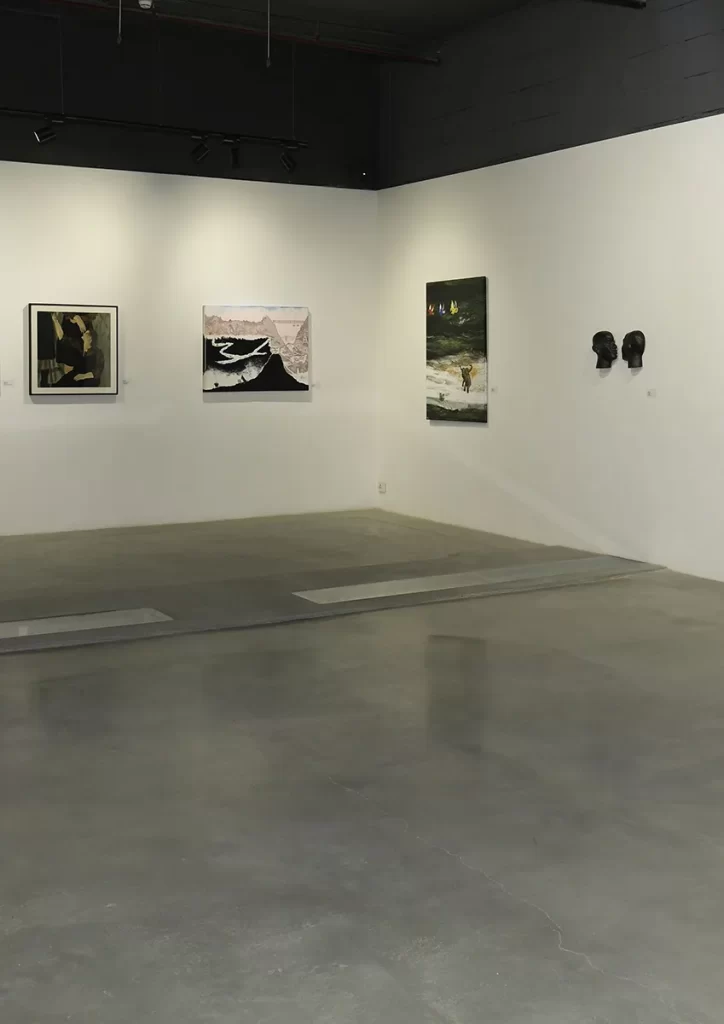
Sanatan has the following facilities:
Art gallery: An art gallery will be set up to showcase various forms of art including paintings, drawings, photography and sculpture.
Performance space: The centre will have a dedicated space for music, dance and other performances.
Library: A library will be set up with a collection of books, journals, and other resources related to music, dance and art.
Workshop and class spaces: Along with an auditorium of 140 seating will be used for educational activities, including art classes, music lessons and dance workshops. The area outside the auditorium has a breakout space for pre discussions and several breakout rooms for further discussions.
The Vision for Sanatan is
- SANATAN would strive to promote, support and project the continuum, vibrancy, innovative spirit of Indian classical performing arts; It would endeavour to enhance their informed appreciation and encourage critical thinking about them.
- SANATAN would provide spaces for display of visual arts, to promote critical appreciation of them and create occasions for exchange of ideas about them.
- SANATAN would have a select library devoted to visual and performing arts which would also initiate, from time to time, talks, panel discussion etc. relating to arts, literature and ideas.
- SANATAN, with a view to developing a community of aesthetes whose interest would cover various arts, literature, ideas etc. organise art appreciation courses, both short and long terms.
- SANATAN would aspire to be a destination for artists, authors and writers, theatre persons, musicians and dancers, person of ideas to meet, for informal dialogues and exchanges.
- SANATAN may overtime organise well-curated festivals of Sanatan awardees (multi arts), young classical performers (music and dance), young film makers (cinema and documentary), young scholars (academics), young poets (poetry) etc.
- Located close to Gandhi Peace Foundation, Gandharva Mahavidyalaya and Rajendra Bhavan, SANATAN would take inspiration from Gandhian ideas, aesthetic vision embedded in our classical heritage and blameless life.
- SANATAN would have an advisory council consisting of eminent experts and connoisseurs of arts, culture and ideas to guide its path.